Colombia's comforting national treasure
" For many Colombians, a steaming bowl of ajiaco evokes home, heritage and togetherness "
The origin of ajiaco is up for debate! Chile, Columbia, Cuba or Peru?
The word “ajiaco” is derived from “aji”, the native Taíno word for hot pepper.
Chile: ajiaco features a northern origin of beef, onion, carrot, paprika, garlic, chili, potatoes, seasoning, powdered rib broth with coriander and parsley garnish.
Cuba: ajiaco is prepared as a hearty stew made from beef, pork, chicken and vegetables. and in the Cuban city of Camagüey, the San Juan festival begins with the making and serving of ajiaco.
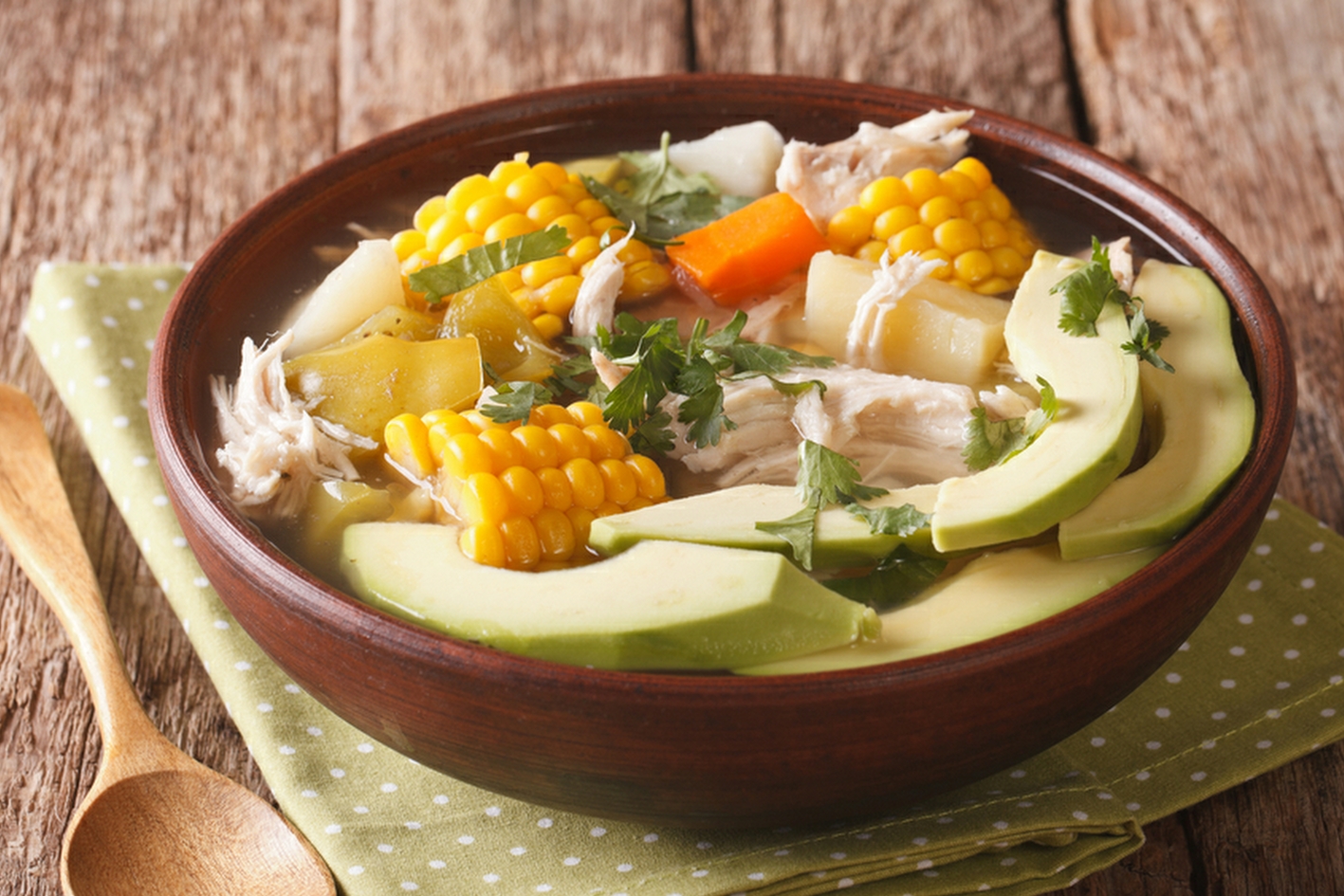
Colombia: ajiaco is one of Colombia’s most beloved dishes. A hearty, aromatic soup that captures the essence of the country’s highland cuisine. Especially popular in the capital, Bogotá, this warming dish is much more than a meal. It’s a symbol of Colombian hospitality and tradition.
Peru: the dish has several regionally specific variations. In fact, in Peru ajiaco is a quite different dish: potatoes cooked with garlic, a mix of dried yellow and red chilies accompanied by rice and stewed chicken or rabbit.
At its heart in Columbia, ajiaco is a chicken and potato soup enriched with several key ingredients that make it truly distinctive. The recipe begins with chicken breast or thighs simmered gently until tender, often in a broth flavoured with onion, garlic and spring onion. The defining feature, however, is the trio of native Colombian potatoes: criolla, sabanera and pastusa. Each brings a unique texture: criolla melts to thicken the broth, pastusa gives body, and sabanera holds its shape, creating a perfect balance of creaminess and bite.
Another essential component is guasca, a wild herb found in the Andean region. It lends ajiaco its unmistakable earthy, slightly tangy flavour, impossible to replicate with any other seasoning. Traditional accompaniments add that something different: a spoonful of capers, a drizzle of double cream, a wedge of ripe avocado and a side of fluffy white rice. Diners mix these extras to taste, tailoring each mouthful to their liking.
Ajiaco’s origins are believed to date back to pre-Columbian times, when the Muisca people, native to the Andean highlands, prepared similar potato-based soups using local herbs and vegetables. Over centuries, Spanish influences introduced chicken and dairy elements creating the version loved today.
What makes ajiaco particularly special? Its cultural role. Often served during family gatherings, national holidays and festive occasions, ajiaco offers comfort during Bogotá’s cool mountain evenings. For many Colombians, a steaming bowl of ajiaco evokes home, heritage and togetherness.
Whether enjoyed in a bustling Bogotá restaurant or cooked lovingly in a family kitchen, ajiaco remains a quintessential expression of Colombia’s culinary soul. Simple ingredients, patiently prepared, transforming simple ingredients into something wonderfully nourishing and deeply meaningful.
In conclusion, although Bogotá claims it as its signature dish, variations exist across Latin America: from Cuba’s more robust meat-and-root-vegetable stew to Peru’s spicier renditions.
Prepared by a Chaîne News Online Staff Writer
Researched from various sources. E&OE

A historic milestone for Bulgarian gastronomy