Slow roasted goat kid
" Across Argentina, Mexico and Spain, cabrito endures not just for its tender meat but for what it represents "
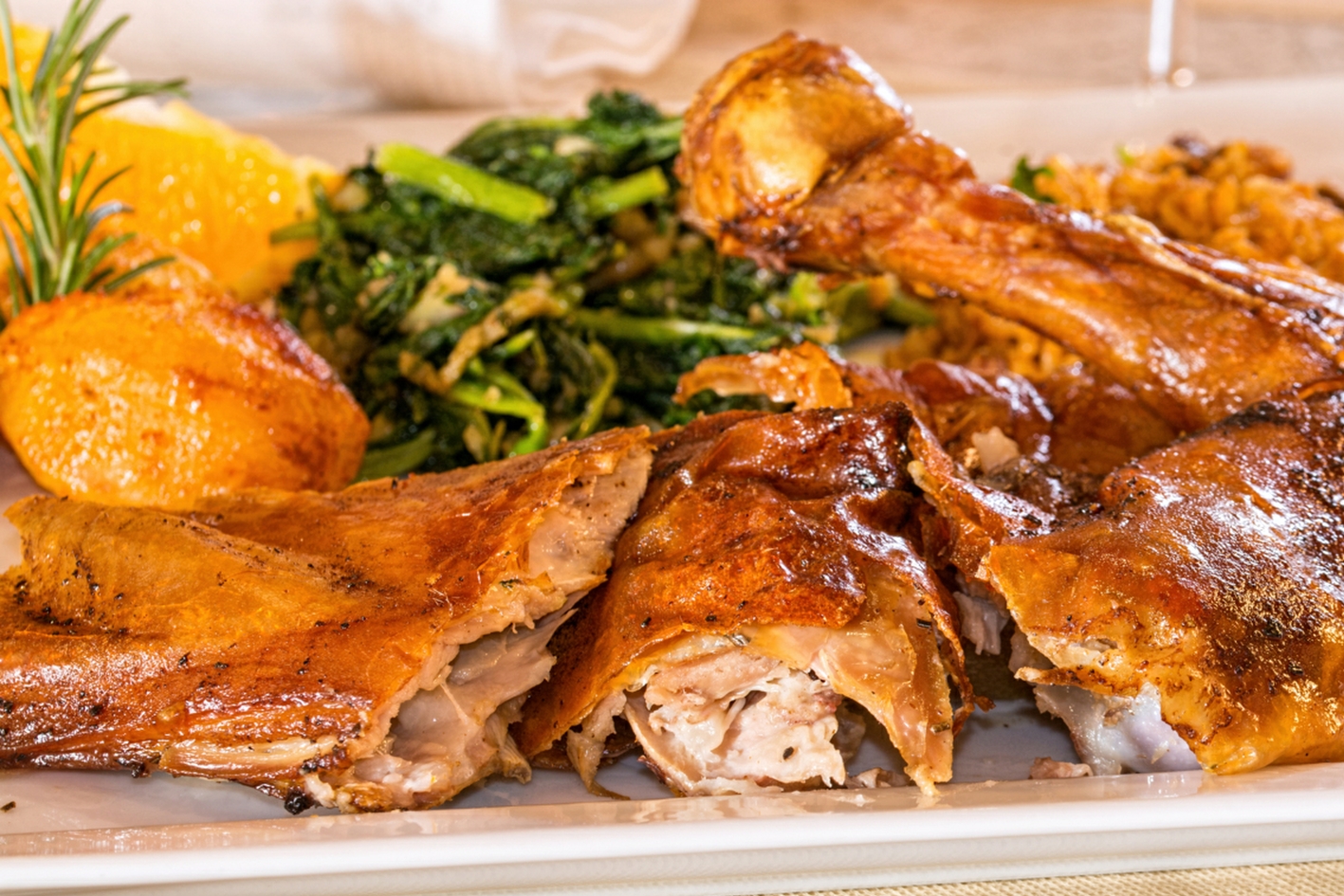
Cabrito, a succulent dish of slow roasted young goat, is much more than a meal: it’s a symbol of heritage, community and celebration that spans continents and centuries. With its roots in Spain and Portugal, Cabrito travelled across the Atlantic to take on unique and cherished forms in Latin America, especially in Mexico and Argentina. Today it remains a hallmark of rural feasts, religious festivities and family gatherings, prized for both its rich flavour and cultural resonance.
The word cabrito itself comes from the Spanish diminutive of cabra, meaning “young goat”. Traditionally, only a kid is used, that is a goat less than three months old. The meat of a kid is tender and mild, with a delicate sweetness that sets it apart from older goat or lamb. How it’s cooked is equally distinctive: slow roasted over coals, wood fires or in clay ovens. The process can take hours, resulting in meat that is both juicy and deeply infused with smoky nuances.
In the Iberian Peninsula, especially in parts of Spain and Portugal, goat rearing and roasting have ancient roots. Goats were among the earliest domesticated livestock in the Mediterranean, prized for their adaptability to rugged terrain and meagre grazing. By the Middle Ages, goat dishes were common in rural diets and at seasonal feasts. Roasting a young goat became associated not only with practical cooking methods but with festive occasions. Those occasions where the community gathered under open skies to share food, music and stories.
As Spanish and Portuguese explorers and settlers arrived in the Americas from the 16th century onwards, they brought livestock, culinary techniques and traditions with them which included the art of roasting goat.
In Mexico, cabrito found particularly fertile ground. In the arid landscapes of the northern states, Nuevo León, Coahuila and Tamaulipas, goat herding was well suited to the environment. In the north-east of the country, the Monterrey region in particular developed a celebrated cabrito tradition: cabrito al pastor is roasted slowly on a spit over mesquite coals, basted with salt, lemon and garlic. Served with warm tortillas, salsas and grilled nopales more than food it’s an expression of regional identity.
In Argentina, especially in the northwest and on the pampas, goat roasting also became a rural institution. Here, cabrito is often cooked a la cruz, stretched on a metal cross and placed near open flames. This allows both wind and fire to impart a uniquely Argentine smokiness. Whether at family gatherings or major cultural festivities, the shared experience of carving cabrito is a treasured ritual.
Across Argentina, Mexico and Spain, cabrito endures not just for its tender meat but also for what it represents: continuity with the past, connection to place, and the simple joy of breaking bread or in this case, carving goat together.
Prepared by a Chaîne News Online Staff Writer
Researched from various sources. E&OE