Tuscany's fisherman's stew with a story to tell
" Cacciucco is sometimes compared to French bouillabaisse. However, the Tuscan version has its own personality "
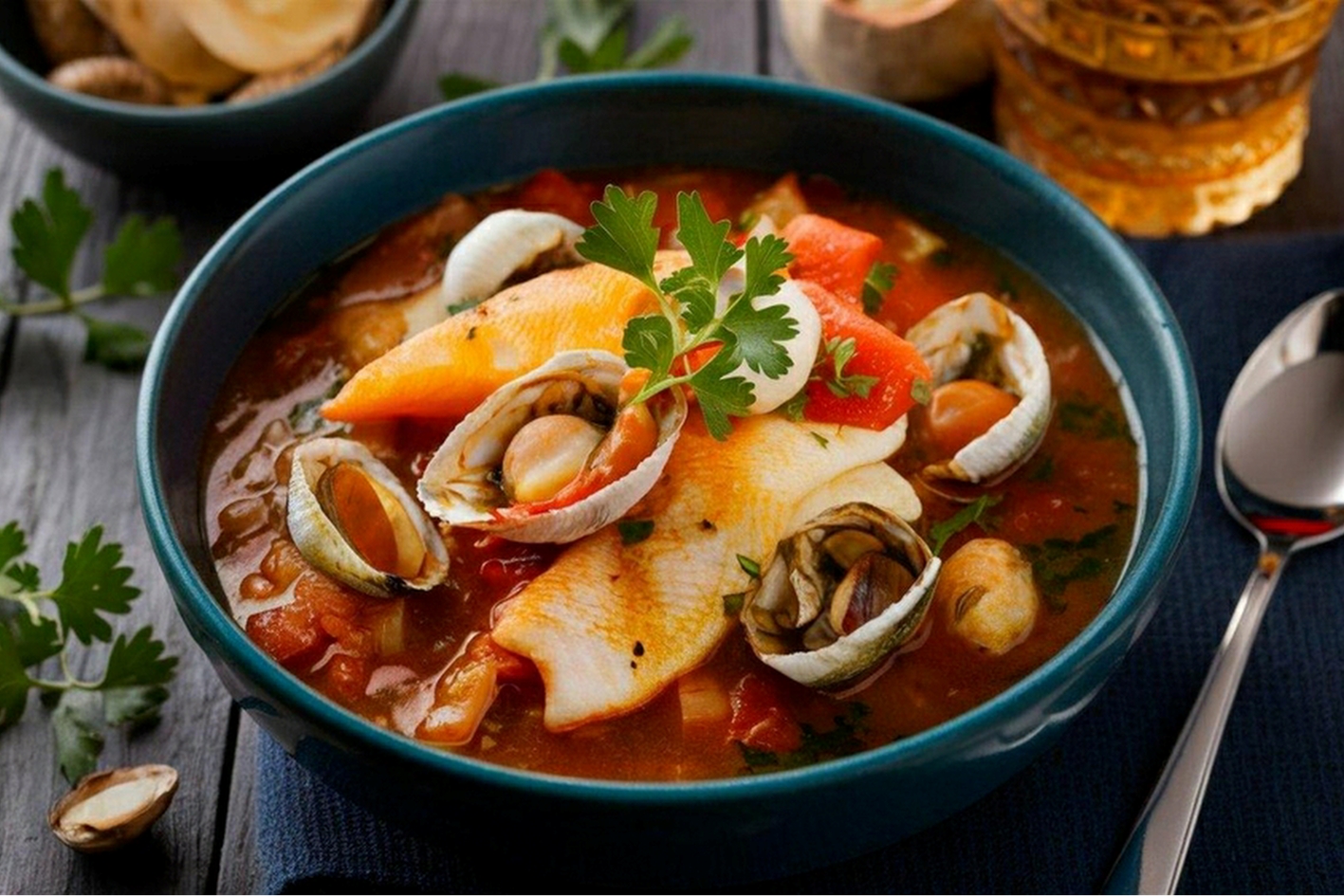
Cacciucco (pronounced ka-CHOOK-ko) is one of Italy’s most distinctive seafood dishes. This rich, peppery fish stew is strongly associated with the Tuscan coast, especially the port city of Livorno. Hearty, deeply flavoured, and proudly rustic, it is a dish that reflects the working life of fishermen and the culinary character of the Mediterranean.
The origins of cacciucco are rooted in necessity. Like many coastal dishes, it began as a way to use fish that could not easily be sold. The small, bony, or damaged catch, and mixed varieties brought in by the nets. Fishermen’s families would simmer these assorted fish with aromatics and local ingredients, producing a warming stew that was filling, economical, and packed with flavour. Over time, it moved from humble home cooking into trattorias, becoming a signature of Livornese cuisine.
Cacciucco is sometimes compared to French bouillabaisse. However, the Tuscan version has its own personality. Where bouillabaisse often leans on saffron and refined presentation, cacciucco is darker, more intense, and built on tomatoes, garlic, and chilli. It is a dish with backbone. It’s the sort of stew that demands good bread and a glass of red wine.
Traditionally, cacciucco is made with a variety of seafood. Many cooks insist that it should contain “five kinds of fish”, a nod to the five “c”s in the name. Whilst this is more folklore than rule, the principle is sound: a mix of textures and flavours makes the stew. Typical ingredients include squid or cuttlefish, mussels, prawns, and several types of fish such as gurnard, monkfish, scorpionfish, or other local varieties. Oily fish and bony fish are often used to enrich the base. With firmer pieces added later so they remain intact.
The flavour foundation is a soffritto* (sometimes a lot of it) and olive oil, often with dried chilli for heat. Red wine is commonly used to deglaze the pan, followed by tomatoes which could be fresh, tinned, or concentrate depending on the cook. The seafood is added in stages according to cooking time, so that nothing becomes rubbery or falls apart.
One of the most iconic elements is the serving style: cacciucco is ladled over thick slices of toasted bread rubbed with garlic. The bread soaks up the stew, turning every spoonful into something satisfying and complete.
Today, cacciucco remains a proud emblem of Livorno and the Tuscan coast. A dish that still tastes like the sea. Still carries the spirit of its origins: bold, practical, and unapologetically full of flavour.
Prepared by a Chaîne News Online Staff Writer
Researched from various sources. E&OE
* In Spanish and Italian cooking it’s a mixture of lightly fried onions and garlic, usually with tomatoes and other vegetables, used as a base for soups and stews.