A hearty dish steeped in tradition
" Haleem's appeal has spread far beyond its origins "
Rich, comforting, and deeply satisfying, haleem or halim is one of South Asia’s most cherished dishes. Originating from the Middle East known as harees, it travelled centuries ago to the Indian subcontinent, where it evolved into a beloved culinary tradition, especially during the holy month of Ramadan. Today, it holds a special place on festive tables across India, Pakistan, Bangladesh and beyond.
At its essence, haleem is a slow-cooked stew made from wheat, barley, lentils, and meat which is usually mutton, beef, or chicken. What makes it truly unique? The long, patient cooking process, where all the ingredients are simmered together for several hours until they blend into a thick, creamy paste. This texture, both smooth and hearty, is what distinguishes haleem from other dishes. The cooking liquid is either water, milk or a broth. Traditionally cooked in large wood-fired cauldrons.
The dish is believed to have its roots in Arabian harees, a porridge-like meal introduced to the Indian subcontinent during the Mughal and later the Nizam eras. Over time, local cooks infused it with South Asian spices such as cumin, coriander, garam masala, and chillies, transforming it into the rich and aromatic Haleem known today. In Hyderabad, India, it has even achieved ‘Geographical Indication’ (GI) status, acknowledging its cultural and regional importance.
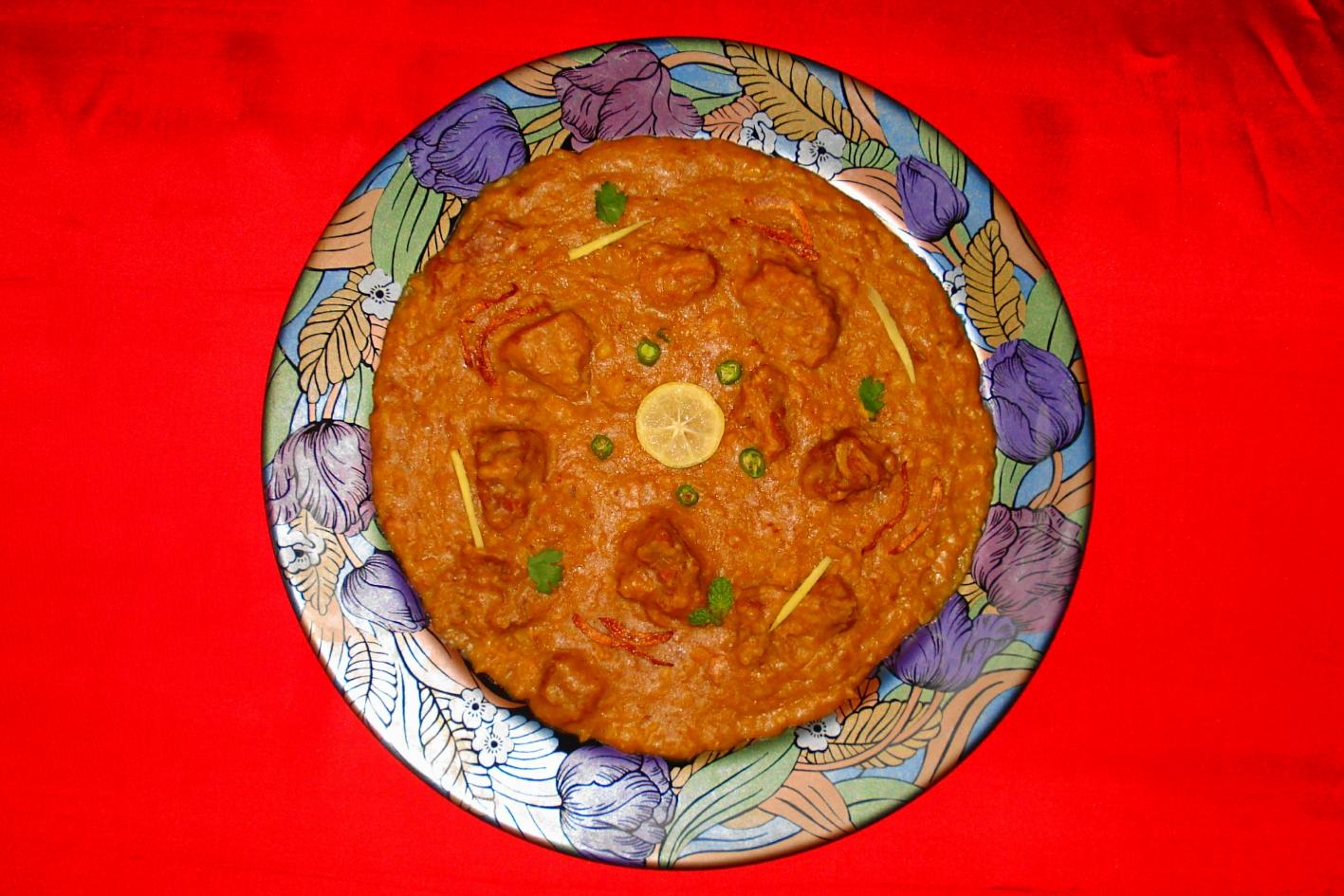
Cooking haleem is an art of patience. The grains and lentils are soaked and cooked until soft. The meat is slow braised until tender then pounded or blended into the mixture. Fried onions, ginger, garlic, ghee with a medley of spices are added in layers to build depth of flavour. The result is a silky, golden-brown dish, often garnished with lemon wedges, fried onions, fresh coriander, green chillies and a drizzle of ghee. Sometimes served with flatbreads or alone. In some parts of Uzbekistan it’s served with sugar.
Beyond its taste, haleem is valued for its nutritional richness. Packed with protein, fibre, and complex carbohydrates, it provides lasting energy. This makes it especially popular during Ramadan, when it is eaten to break the fast. It is also regarded as a restorative food, offering warmth and strength during cooler months. Sold also as a snack and as street food.
Haleem’s appeal has spread far beyond its origins. Today, it is enjoyed in homes, restaurants and street stalls across South Asia and the Middle East, each version reflecting local preferences and ingredients.
Whether served during a celebration or shared as a comforting meal, haleem remains a symbol of generosity, togetherness and the soulful power of slow cooking.
Prepared by a Chaîne News Online Staff Writer
Researched from various sources. E&OE

A historic milestone for Bulgarian gastronomy