
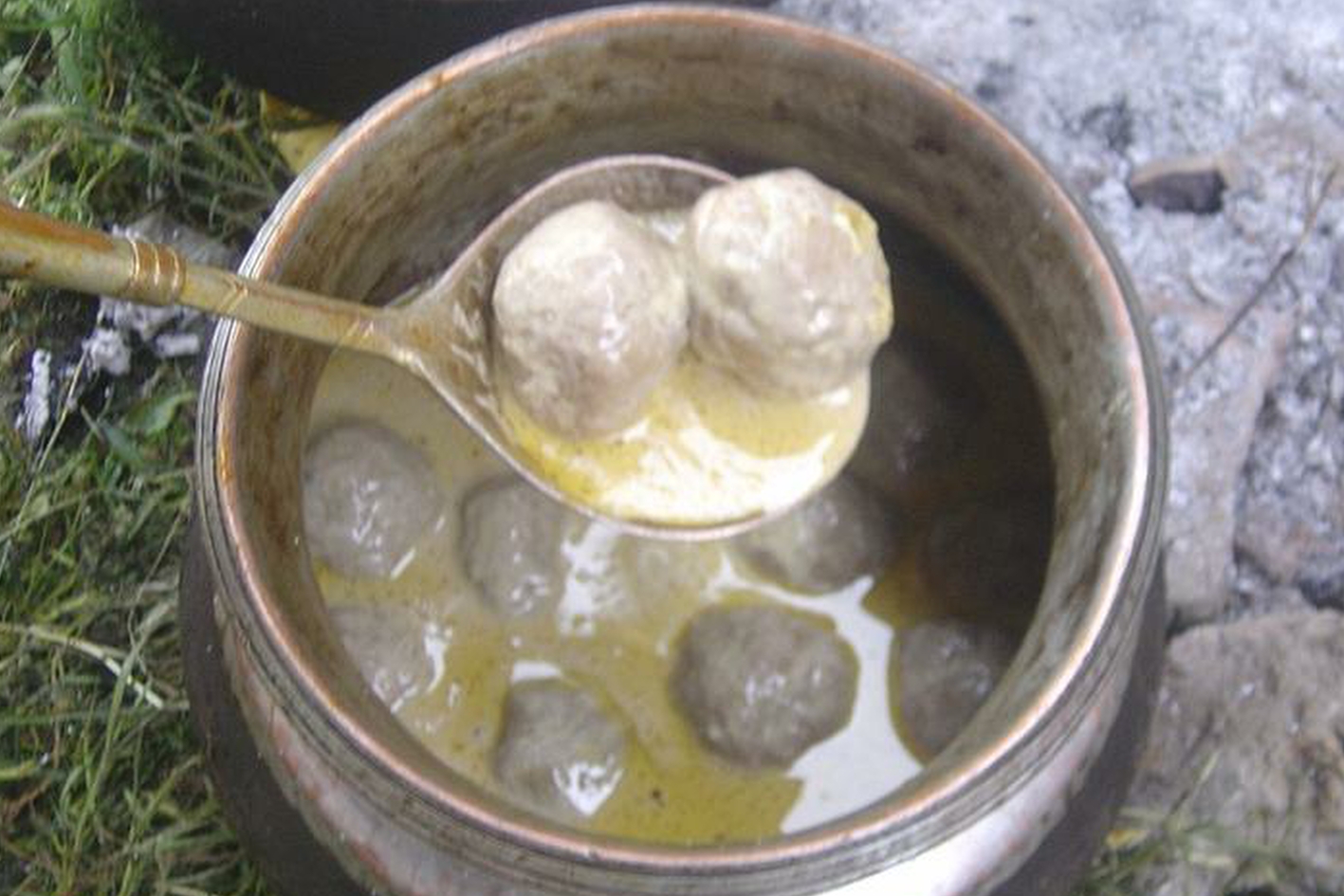
The "King" of Kashmiri cuisine
" In traditional Kashmiri culture, the skill required to prepare Goshtaab is so highly regarded that mastering it is often seen as the ultimate test of a chef's expertise "
Goshtaab (also spelled goshtaba or gushtaba) is one of the most celebrated traditional dishes of Kashmir. Often described as the “king of the wazwan”. Wazwan is the region’s elaborate multi-course ceremonial feast. Rich refined and deeply traditional, it is far more than a simple meatball curry. Goshtaab represents centuries of culinary heritage, craftsmanship and social ritual.
Origins and historical background
Goshtaab’s origins lie in the Kashmir Valley where this cuisine was developed through a blend of local traditions and external influences. Historians trace Goshtaab’s roots to the Mughal period, when Persian and Central Asian cooking techniques were introduced to the region during the reign of the Mughal emperors. These influences shaped the use of aromatic spices, yoghurt-based sauces, and finely processed meats. Gradually Goshtaab evolved into a distinctive Kashmiri speciality.
Originally, Goshtaab was considered a royal dish, prepared for nobility and special guests. Over time, it became an essential part of wazwan, a grand feast associated with weddings and important celebrations. Goshtaab’s position at the end of the meal is symbolic. It marks the culmination of hospitality and honour offered to guests.
Unusual features and preparation
What truly distinguishes Goshtaab from other meatball dishes worldwide is its extraordinary texture and preparation technique. Instead of being minced in a conventional way, the mutton is painstakingly pounded into a smooth paste, traditionally using wooden mallets. This process can take hours! It’s considered a hallmark of a skilled Kashmiri Waza, a master chef. The Wazas are experts in creating the Wazwan, the multi-course Kashmiri feast.
The resulting meatballs are unusually large, soft and almost velvety in consistency. Absolutely different to the coarse texture of typical meatballs such as kofta. Goshtaabs are then gently, slowly cooked in a creamy yoghurt gravy flavoured with mild spices such as fennel, cardamom and dried ginger. This produces a rich yet delicately balanced dish.
Another unusual aspect is the emphasis on subtlety rather than heat. Despite being aromatic, Goshtaab is not typically spicy, thus reflecting a refined palate developed in royal kitchens.
Cultural uses and significance
Goshtaab is not an everyday meal. It is reserved for special occasions such as weddings, festivals and formal gatherings. Serving it signifies respect and generosity towards guests. In traditional Kashmiri culture, the skill required to prepare Goshtaab is so highly regarded that mastering it is often seen as the ultimate test of a chef’s expertise.
Beyond its culinary appeal, Goshtaab also acts as a cultural symbol. Goshtaab represents the fusion of history, artistry and communal dining. Its continued presence in modern Kashmiri feasts highlights how food can preserve tradition whilst remaining central to social life.
In essence, Goshtaab is not merely a dish. It’s a culinary statement. A luxurious blend of history, technique and cultural meaning, served in one deceptively simple bowl.
Prepared by a Chaîne News Online Staff Writer
Researched from various sources. E&OE

From Cologne to Oslo - a guest of the Chaîne in Norway
A Renaissance garden of water, art and wonder