
An evening to remember at Kappo Takashi
" For the OMGD Dinner Group, it was a rare and thoughtful exploration of Japanese cuisine, sake, and fellowship "
There is something quietly thrilling about arriving at a restaurant that does not announce itself too loudly.
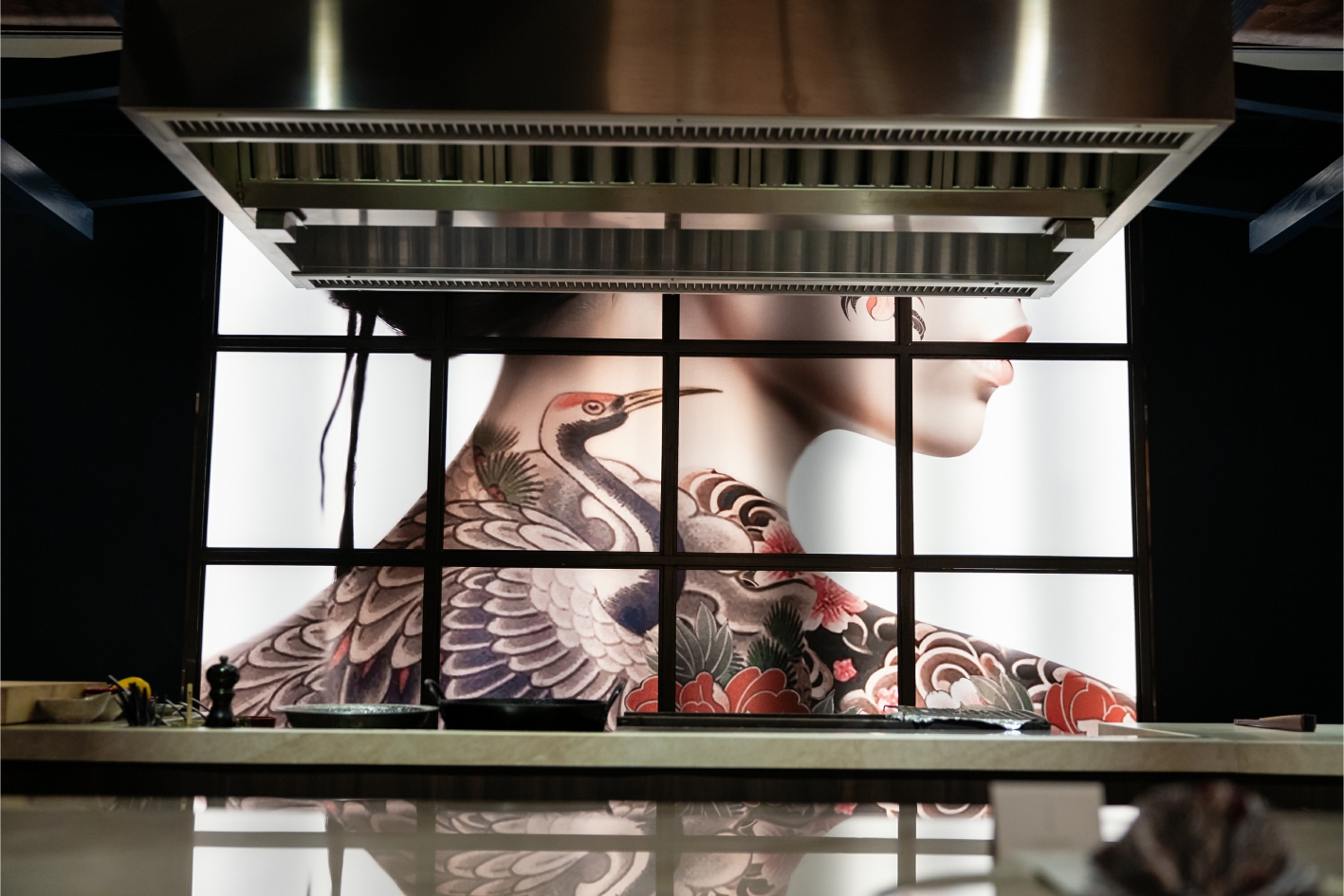
On the evening of June 5th, the Bailliage of Bangkok Rattanakosin’s Ordre Mondial des Gourmets Dégustateurs (OMGD) Dinner Group gathered at Kappo Takashi, hidden high above Bangkok’s bustle. From the moment guests passed through the traditional Japanese noren* curtain, the city fell away. They entered Chef Takashi Sasaki’s intimate kappo showroom. A dramatic counter dining room where every seat offered a front-row view of the evening’s craft, framed by illuminated tattoo artwork that gave the space its quiet sense of theatre.
Here, Chef Takashi was not hidden behind a kitchen wall. But the quiet force at the centre of the evening, moving with precision, humour, and warmth as he prepared each course in full view of the group. His manner was focused but never distant. Chef Takashi joked, explained, adjusted, and engaged with guests throughout the meal, creating the rare kind of dining experience where formality gives way to intimacy.
Chef Takashi’s cooking reflected that same balance. His dishes carried the discipline of Japanese technique, also the confidence of a chef willing to be playful. The menu showcased prized seasonal ingredients, including flavours and products connected to his hometown of Iwate, Japan, thus giving the dinner a sense of personal geography as well as craft. Luxury was present: caviar, sea urchin, bluefin tuna, Korobuta**, Wagyu. It never felt excessive. The pleasure came from watching how each ingredient was handled. How restraint could be as expressive as richness. How each course seemed to reveal a little more of the chef himself.
The evening began in celebratory fashion with Champagne, paired with the opening course of crab gelée and caviar. A refined start: bright, elegant, and familiar enough to ease guests into the night. From there, the dinner took a more intriguing turn, moving steadily into the world of sake.
Guided by Sake Master Khun Koi, the rest of the evening became a deep dive into sake’s remarkable range and complexity. Guests were introduced not only to the pairings themselves. Also to the brewing methods, tasting techniques, temperatures, glassware, and pairing strategies that shape how sake is experienced. One of the evening’s most memorable discoveries was how dramatically a single sake could change depending on how it was served. Becoming more aromatic, rounder, softer, sharper, or more expressive with a shift in temperature or vessel. Fascinating!
The pairings were not simply poured alongside the food. They were explained, tested, and experienced. As Chef Takashi’s menu moved through seasonal Japanese ingredients, from delicate seafood and dashi to Wagyu, rice, and warabimochi, Khun Koi helped guests understand how sake could interact with umami, fat, sweetness, salinity, and texture. A delicate course might draw out one side of a sake, while a richer dish revealed another. In this way, the dinner became not just a tasting menu, but a conversation between chef, sake master, ingredient, and glass.
By the end of the night, Kappo Takashi felt less like a restaurant one simply visits and more like a room one is invited into. Behind the noren*, Chef Takashi offered something quietly memorable: precision without stiffness, education without formality, and hospitality that felt deeply personal.
For the OMGD Dinner Group, it was a rare and thoughtful exploration of Japanese cuisine, sake, and fellowship. The kind of evening that reminds us why the most memorable dining experiences are often the ones that feel both hidden and shared.
Teresa Andersson
Vice-Chargé de Presse
* A noren is a traditional Japanese fabric divider hung in doorways, across windows, or between rooms. It features one or more vertical slits at the bottom to allow easy passage. Beyond room division and temperature control, it serves as a business sign and a cultural symbol of reputation and hospitality.
** Kurobuta (Japanese for “black pig”) is the Japanese name for the heritage Berkshire pig, widely considered the “Wagyu of pork” which was gifted to the Emperor of Japan in the 19th century.
Chaîne tradition and culture with a Princely theme
Three days of friendship, discovery and Princely enjoyment
Remembering the 50th anniversary of the 'Judgment of Paris'