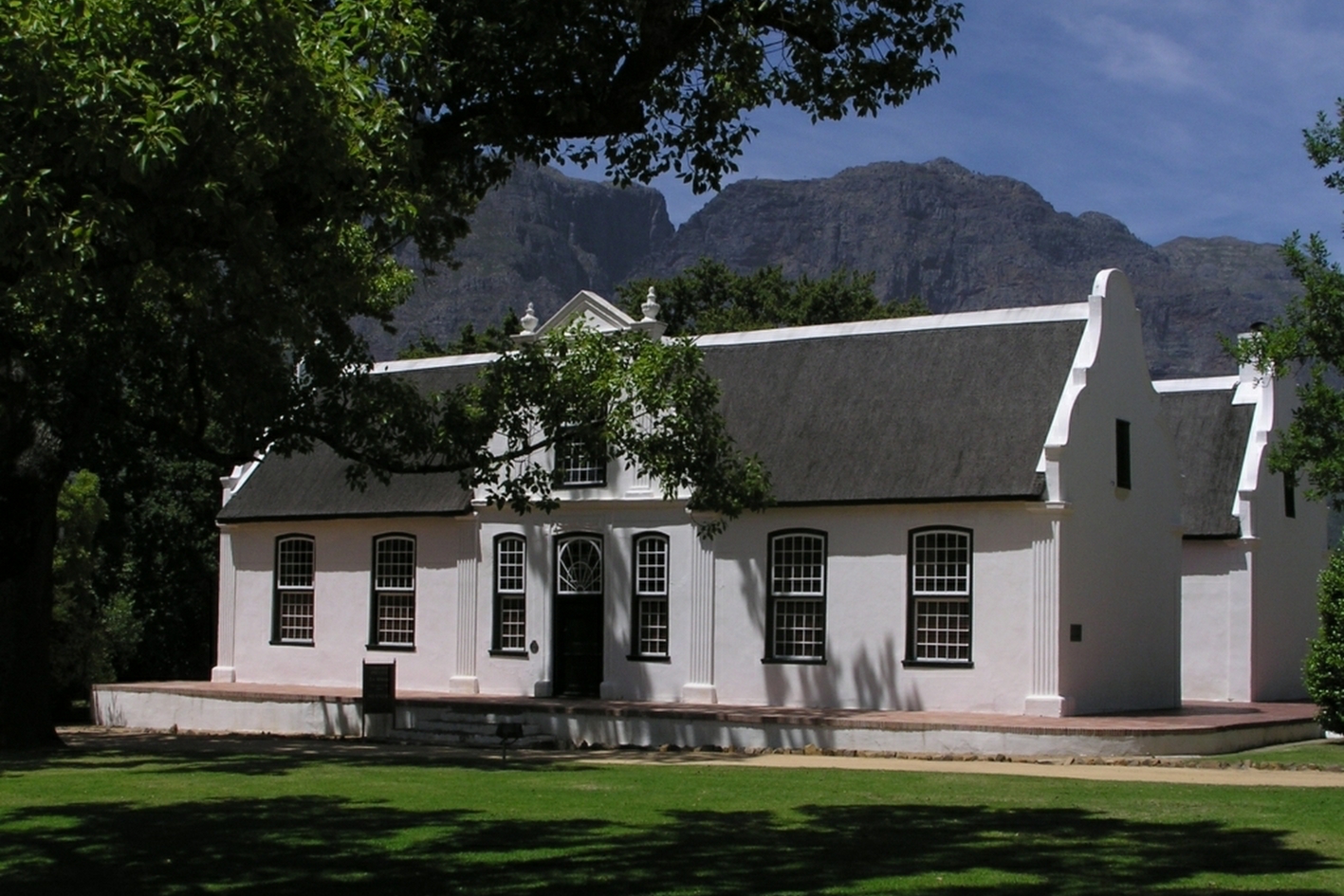
Almost four centuries of South African winemaking
" Our wine heritage belongs to the people who continue to care for it and give it new expression. Sharing that heritage with our international Chaîne family was a privilege and an invitation to keep discovering South Africa: one conversation and one glass at a time "
A proud heritage and a story of discovery, resilience and renewal was shared with the members and guests during the International Ordre Mondial des Gourmets Dégustateurs (OMGD) Grand Chapitre held in Cape Town and the Cape Winelands from October 7-11, 2026.
Where the story began
South Africa’s wine story has a remarkably precise starting point. On February 2, 1659, Jan van Riebeeck recorded the first wine made from Cape grapes. That modest beginning grew into an industry whose historic estates, distinctive varieties and contemporary wines continue to invite discovery.
The Dutch East India Company had established its Cape refreshment station in 1652 to provision ships travelling between Europe and Batavia, now Jakarta. Vine cuttings arrived in the 1650s and were propagated in the Company’s garden. The early growers had much to learn; enthusiasm alone could not guarantee good wine.
For our OMGD Grand Chapitre, this history provided a thread connecting the estates, tastings and shared meals. We wanted guests to discover the quality of the wines and the people as well as the places behind them.
Constantia and the growth of the Cape vineyards
When Simon van der Stel arrived at the Cape in 1679, he made wine quality a priority. He challenged the use of unripe grapes and poor cellar hygiene. He demonstrated the value of harvesting ripe fruit and handling it carefully. His ambition was to show what the Cape could produce.
In 1685, he was granted the land on which he established Constantia. Its reputation grew, and the sweet wines produced on later subdivisions of the estate became celebrated abroad. Constantia entered the cellars of royalty and connoisseurs and found a place in literature, giving the Cape an enduring association with fine wine.
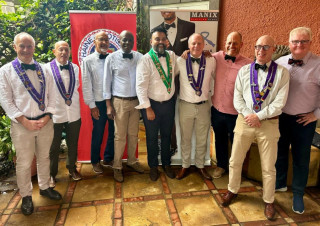
Friendship across Bailliages: moments from the opening reception
Vineyards also spread through Stellenbosch and the Paarl–Franschhoek area. French Huguenot settlers contributed skills and traditions that became part of the Cape’s developing wine culture. Numerous estates still producing today trace their origins to the seventeenth century, including Spier, Boschendal and Plaisir.
The Constantia visits brought our own programme back to this shared heritage. Klein Constantia’s tasting and the closing Gala at Groot Constantia offered different expressions of a common origin. Grand Constance 2022, served with dessert at the gala, gave that historical thread a fitting conclusion.
A heritage tested
The arrival of phylloxera in 1886 devastated vineyards and forced extensive rebuilding. Later, war, economic hardship and oversupply placed growers under further strain. The formation of the KWV (Ko-operatiewe Wijnbouwers Vereniging van Zuid-Afrika) in 1918 sought to stabilise the industry, including through minimum prices and outlets for surplus production. Distillation became an important part of the picture, alongside the development of South African brandy.
Innovation through changing times
The 20th century brought both constraints and achievements. Regulation limited the freedom of producers, while apartheid and international isolation narrowed opportunities for exchange. Yet important foundations for the modern industry continued to develop.
Origin, old vines and a distinctive grape
The ‘Wine of Origin’ scheme, introduced in 1973, strengthened the link between a wine and its stated place of origin. The source history also highlights the vineyard blocks that would later be valued as old-vine heritage, particularly Chenin Blanc. Once widely used for bulk wine and distillation, Chenin has become a defining strength of South African fine wine.
Pleasure of meeting again making new connections around a shared interest in wine
Pinotage offers another distinctive strand. Professor Abraham Izak Perold crossed Pinot Noir and Cinsaut, then locally called Hermitage. The Pinotage Association’s heritage account dates the crossing to November 1924 and the planting of the seeds to 1925, the year recognised as Pinotage’s birthday. The variety’s growing range of styles continues to demonstrate its possibilities.
The founding of the Cape Winemakers Guild in 1982 created a platform for collaboration, shared learning and international benchmarking. Its emphasis on excellence remains part of the story of South African wine’s renewal.
From familiar names to new discoveries
Established labels helped introduce generations of drinkers to South African wine. Meanwhile, bottle-fermented sparkling wine opened another avenue: Simonsig’s Kaapse Vonkel, launched in 1971, was a pioneering step towards today’s Cap Classique category. Together, these developments show an industry shaped by both continuity and experimentation.
A modern wine country
Since the first democratic elections in 1994, renewed international contact has helped transform the wine industry. Winemakers and viticulturists gained greater access to travel, ideas and technical exchange, while exploring more deeply the possibilities of their own vineyards.
Old, dry-farmed vineyards attracted renewed attention, including in the Swartland. Producers also sought cooler locations and sites influenced by altitude or the sea, from Ceres and Sutherland to Hemel-en-Aarde and Cape Agulhas. The result is a broad range of wines that can express their origins with freshness, balance and individuality.
The industry in perspective:
The 2025 SAWIS figures cited in the supplied history describe 86,525 hectares under wine grapes and 507 cellars crushing grapes: 434 private cellars, 44 producer cellars or co-operatives, and 29 producing wholesalers. White varieties account for 55.8% of plantings.
Leading varieties and share of plantings:
- Chenin Blanc 18.4%
- Sauvignon Blanc 12.1%
- Colombard 10.6%
- Cabernet Sauvignon 9.9%
- Shiraz 9.4%
- Chardonnay / Pinotage 7.6% each
- Merlot 5.7%
Statistical snapshot: 2025 SAWIS figures as cited in “A Proud Heritage”, supplied for this publication; not a statement of 2026 totals.
A heritage made personal
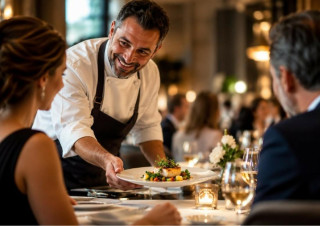
The OMGD International Grand Chapitre gave us the opportunity to share this wine story through experiences rather than dates alone. Historic estates offered thoughtful tastings. Hosts introduced wines beyond their familiar labels. Guests discovered combinations of food and drink that reflected South Africa’s variety.
At Kaapzicht, the Pinotage and Braai (BBQ), hosted by Carin and Danie Steytler, brought the theme into a family setting. The welcome, generous food and mature Pinotage examples showed how naturally wine belongs at a South African table. Elsewhere, cellar visits, brandy tasting, gin making and food pairings added further perspectives.
Different generations, shared enthusiasm: guests enjoying the opening celebration
What mattered most was the opportunity to connect. Members and visitors shared knowledge, discovered new favourites and enjoyed one another’s company. The photographs accompanying this history capture that contemporary expression of the Chaîne: fellowship, generosity and the pleasure of welcoming others.
Our wine heritage belongs to the people who continue to care for it and give it new expression. Sharing that heritage with our international Chaîne family was a privilege and an invitation to keep discovering South Africa: one conversation and one glass at a time.
Llewellyn Buckley-Marais
Bailli Délégué
Member of the Conseil Magistral
With much appreciation to the following for the historical narrative adapted from their published works:
“A Proud Heritage / Almost four centuries of winemaking”
Supporting chronology: Wines of South Africa, “Three Centuries of Cape Wine” (wosa.co.za);
Pinotage Association - “Heritage”