Brazil's beloved seafood stew
" More than just a dish, moqueca represents Brazil's diversity, history and love of communal dining "
Moqueca (also spelt ‘muqueca’) is one of Brazil’s most iconic and cherished dishes. This fragrant, slow-simmered seafood stew reflects the country’s rich cultural history and coastal heritage. Colourful, comforting and full of flavour, moqueca is as much a celebration of Brazilian identity as it is a delicious meal.
The origins of moqueca stretch back over 300 years and reveal a fascinating blend of Indigenous, African and Portuguese influences. The word “moqueca” comes from the Indigenous Tupi term moquém, meaning a clay pot or cooking method. Indigenous Brazilians originally prepared fish by slowly cooking it over open fires in clay vessels. When African slaves arrived in Brazil, they introduced ingredients such as coconut milk, palm oil and peppers, which transformed the dish into the rich, aromatic stew we know today.
Today, moqueca is most closely associated with Brazil’s coastal regions, particularly the states of Bahia and Espírito Santo. These two areas are famous for their distinct versions of the dish.
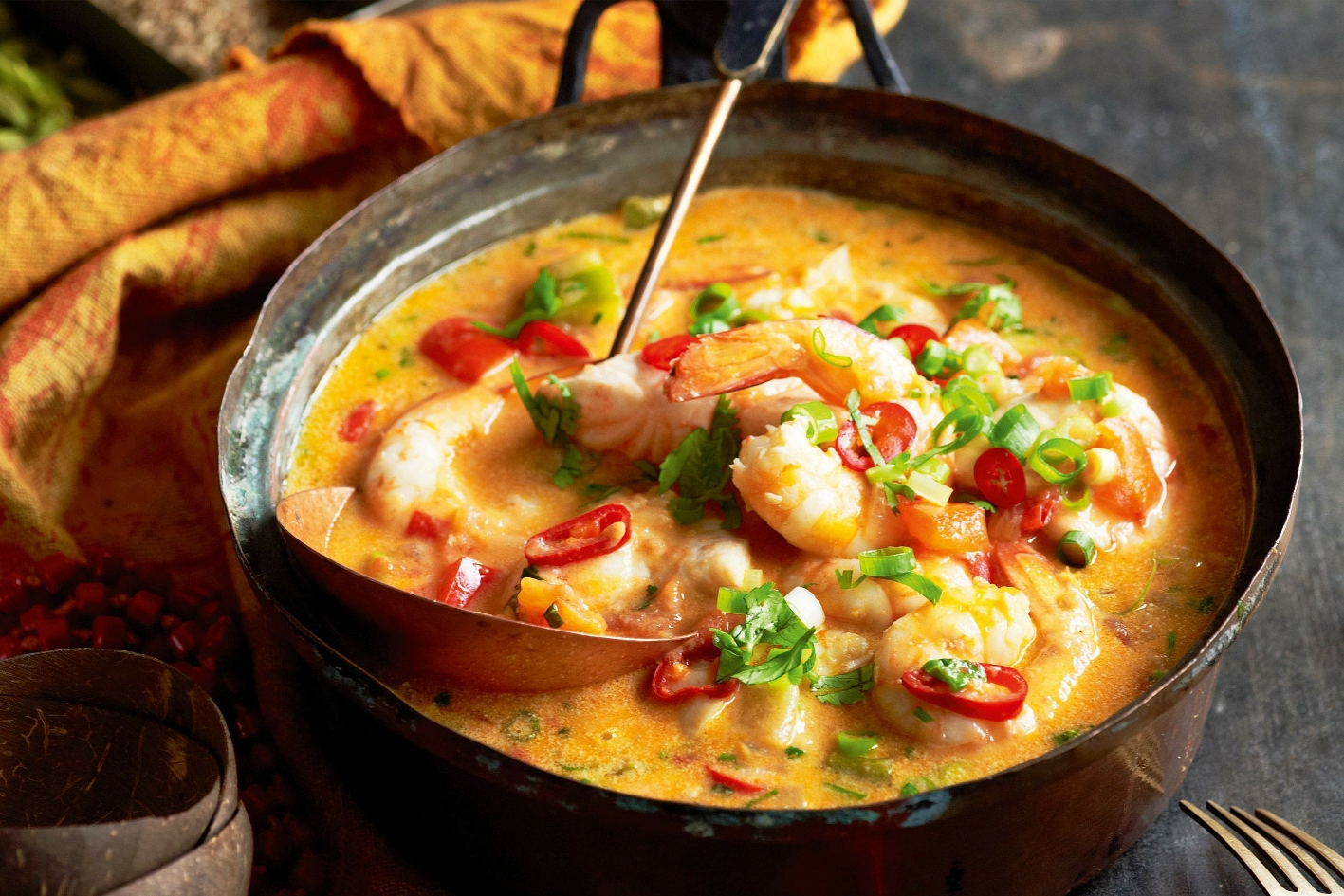
Moqueca Baiana, from Bahia in the north-east, is the most internationally recognised. It is known for its bold flavours and vibrant colour, created by the use of dendê (red palm oil), coconut milk, tomatoes, onions, garlic, coriander and chilli. The seafood, typically fish (could be dorado, shark, whiting, sea bass) or prawns, or a mixture of both, is gently simmered until tender and infused with the sauce’s fragrant spices. A version similar to the Bahian version is found in Angola.
Moqueca Capixaba, from Espírito Santo in the south-east, is lighter and more delicate. It doesn’t use coconut milk or palm oil, relying instead on olive oil, annatto seeds (urucum) for colour and fresh herbs. This version highlights the natural flavour of the seafood. It’s traditionally cooked and served in a black clay pot, which enhances both taste and presentation. Incidentally, in Espírito Santo, the subject is taken so seriously that it has become a heritage site. A neighbourhood in Vitória, was registered as a cultural asset by the National Historical and Artistic Heritage Institute in 2002.
What truly sets moqueca apart is its method of preparation. Unlike many stews, it is not stirred once cooking begins. The ingredients are layered in the pot and gently steamed, allowing the flavours to blend naturally whilst keeping the fish beautifully tender.
Moqueca is usually served with white rice, farofa (toasted cassava flour) and pirão, a creamy sauce made from fish stock and manioc flour. Together, they create a deeply satisfying, comforting meal. For vegetarians plantain is used instead of fish. The full meal will include banana da terra (plantain) stew as a side dish. Each side dish will arrive in its own clay pan.
More than just a dish, moqueca represents Brazil’s diversity, history and love of communal dining. Whether enjoyed in a beachside restaurant overlooking the Atlantic or cooked at home for family and friends, moqueca remains a symbol of warmth, tradition and unmistakable Brazilian flavour.
Prepared by a Chaîne News Online Staff Writer
Researched from various sources. E&OE