
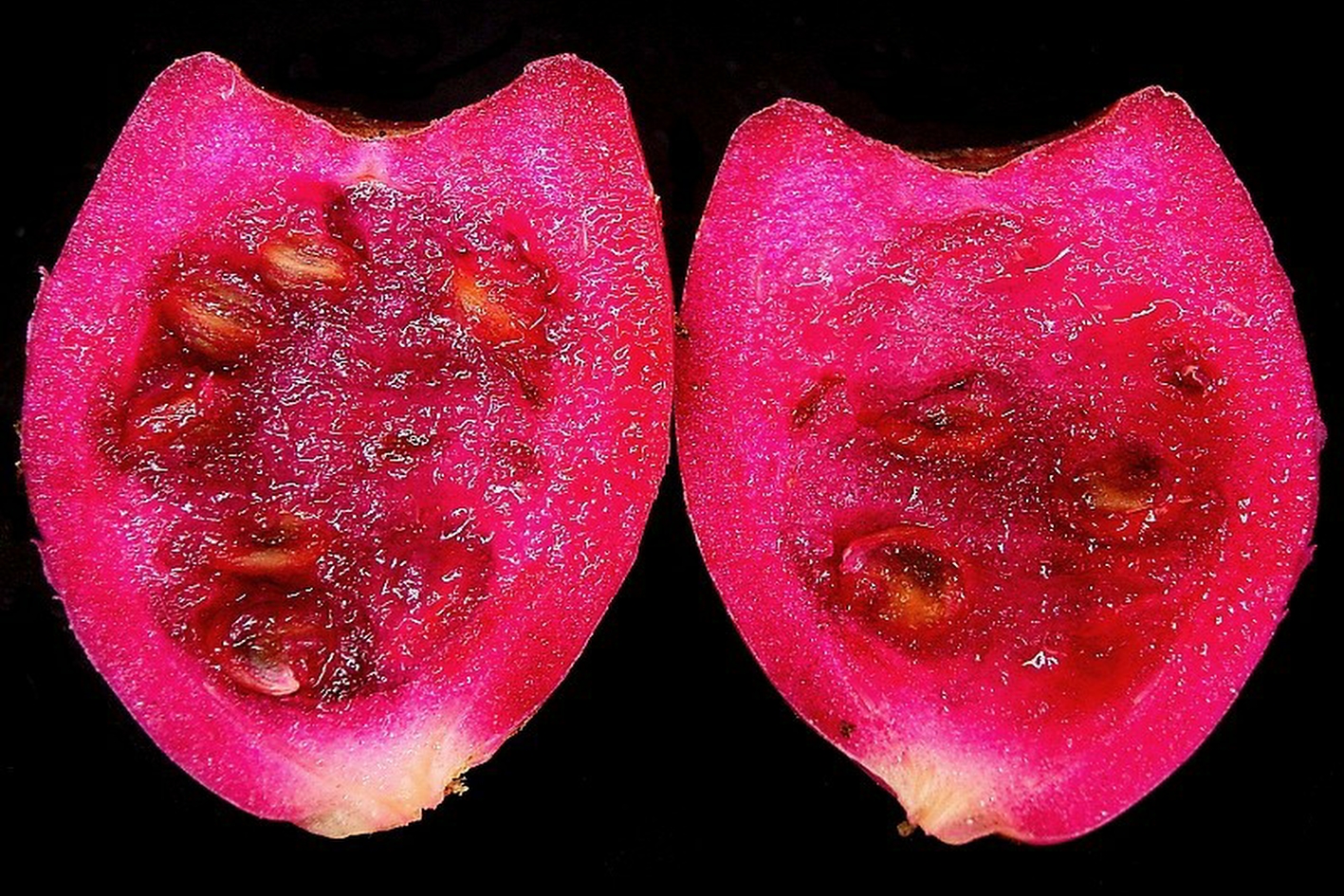
Delicious eaten fresh once peeled
" Prickly pears have a flavour that's often described as a cross between watermelon and strawberry, with a gentle, honeyed sweetness "
Prickly pears are the brightly coloured fruits of the Opuntia cactus, most commonly found in Mexico, the Mediterranean, North Africa and parts of the Middle East. These small, oval fruits have a thick skin that can range from green to golden yellow, deep pink or purple. Hidden inside is a juicy flesh packed with tiny edible seeds. Whilst they’re increasingly popular in shops and cafés, prickly pears are not exactly a “grab and eat” fruit. The skin carries fine, hair-like glochids* that can irritate the skin. Careful handling is essential.
Prickly pears have a flavour that’s often described as a cross between watermelon and strawberry, with a gentle, honeyed sweetness. They’re delicious eaten fresh once peeled. And really shine in drinks. Prickly pear juice has a vivid colour and a refreshing taste, making it popular in smoothies, cocktails, mocktails and lemonades. It’s also used in syrups, sorbets, jams and sauces. The juice pairs well with citrus, mint, chilli, ginger and lime. In savoury cooking, it can add a subtle sweetness to marinades or dressings, especially alongside smoky or spicy flavours.
Prickly pears and their juice are naturally rich in water and contain vitamin C, which supports immune function and helps protect cells from oxidative stress. Also provided are antioxidants, including betalains (the pigments responsible for their striking red and purple hues), which have been studied for their anti-inflammatory potential.
The fruit contains fibre, particularly pectin, which supports digestion and may help with feelings of fullness. However, prickly pear juice often has less fibre than the whole fruit. Eating the fruit itself can offer more digestive benefits. Prickly pears also contain minerals such as potassium and magnesium, which are important for normal muscle and nerve function.
Early research suggests the prickly pear may help support healthy blood sugar and cholesterol levels. It’s not a substitute for medical treatment. If you have diabetes or take medication affecting blood sugar, it’s sensible to treat prickly pear products like any other sweet fruit and monitor how your body responds.
A quick note on safety
When preparing prickly pears, wear gloves and remove the skin carefully. The tiny glochids* are easy to miss and can be very unpleasant. Once peeled, though, you’re left with one of the most distinctive and refreshing fruits you can add to your kitchen.
Prepared by a Chaîne News Online Staff Writer
Researched from various sources. E&OE
* Glochids are microscopic, hair-like, barbed bristles found in dense, easily detached tufts on prickly pear cactus pads and fruit. They cause intense skin irritation, dermatitis, and potential eye injuries. Removal requires tools like tweezers, tape, or glue. Burning (singeing) is used to remove them for consumption.

From Cologne to Oslo - a guest of the Chaîne in Norway

A Renaissance garden of water, art and wonder