Distinctive, tiny parcels hiding a culinary story
" Linguistically, the name 'manti' is thought to derive from the Chinese word mantou which suggests an early connection with Chinese dumplings "
Mantı is one of the most distinctive and beloved dishes of Turkish cuisine, often described as Türkiye’s answer to dumplings or even “mini ravioli”. Yet behind these tiny parcels lies a culinary story that stretches across continents and centuries, reflecting migration, trade, and cultural exchange.
Şafak Erten, Executive Chef at JW Marriott Istanbul Bosphorus and Octo Istanbul, observed that “manti is one of the beloved and traditional dishes in Turkish cuisine. Its filling generally consists of minced meat, onions, and spices. The dough is rolled thinly, cut into small squares, filled with the stuffing, folded, then boiled before being served. Although thought to have Central Asian roots, manti has been adapted into various forms across different regions of Türkiye, each with its own unique twist.”
Origins and historical journey
The origins of mantı are widely traced to Central Asia, where nomadic Turkic peoples developed practical, portable foods suited to life on the move. Dumplings filled with meat were ideal. Prepared in advance, dried or frozen they could be quickly cooked over a fire during long journeys.
Linguistically, the name “mantı” is thought to derive from the Chinese word mantou which suggests an early connection with Chinese dumplings. As trade routes such as the Silk Road linked East and West, the dish travelled with merchants and migrating peoples.
Over time, it spread across Central Asia, the Middle East, and into Anatolia (modern-day Türkiye), where it evolved into its recognisable Turkish form. By the Ottoman period, mantı had become a refined and celebrated dish, appearing in palace cuisine as well as in everyday households.
The Turkish interpretation
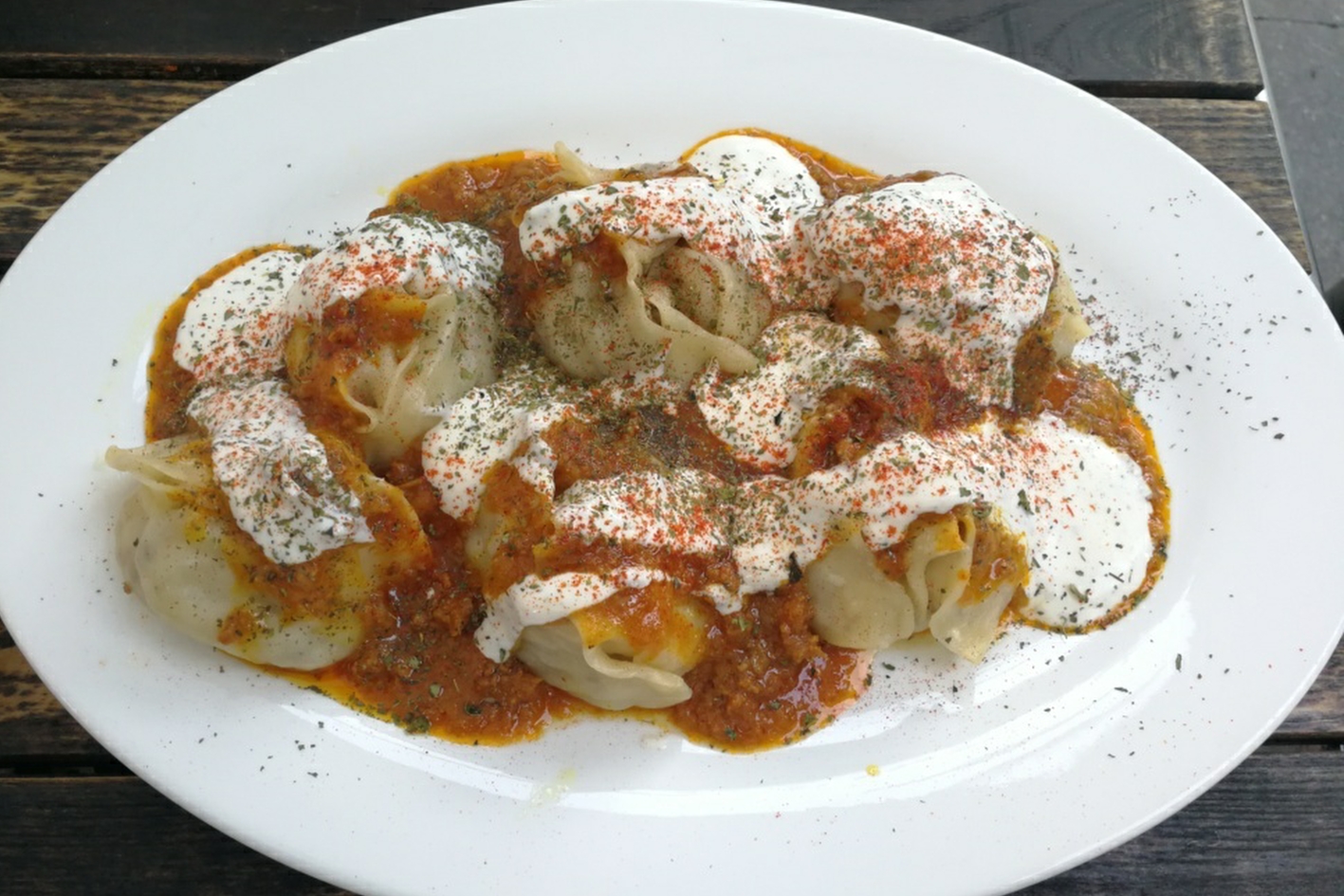
While mantı exists in many countries, the Turkish version particularly from the city of Kayseri is famous for its tiny size and meticulous preparation which is labour intensive. Tradition even holds that a skilled cook should be able to fit dozens of these dumplings onto a single spoon!
What makes the Turkish version unique? Its signature garnish of a generous spoonful of garlic yoghurt, followed by melted butter infused with spices such as paprika or dried mint. This combination of creamy, tangy and spiced elements creates a balanced and deeply satisfying dish. Result? A dish that combines delicate texture with bold, comforting flavours.
Cultural significance
Today, mantı is more than just a meal in Türkiye. It’s a symbol of hospitality, family cooking, and culinary craftsmanship. Preparation is often a communal activity, bringing people together in kitchens to fold hundreds of dumplings by hand.
Although its roots are shared across a vast region, mantı has become firmly embedded in Turkish identity. A reminder of how food evolves through history. Carried by travellers. Shaped by geography. Perfected over generations into something both local and universal.
Prepared by a Chaîne News Online Staff Writer
Researched from various sources. E&OE
A historic milestone for Bulgarian gastronomy