A trip to the wine region of Terra Skåne
" Sweden is new territory for viticulture, where a unique combination of geography and climate makes wine-growing - believe it or not - an industry of the future in this part of the world "
One might well ask: can wine really be grown at 56 degrees latitude? Well, the answer is a resounding yes!
Sweden is new territory for viticulture, where a unique combination of geography and climate makes wine-growing - believe it or not - an industry of the future in this part of the world. If we take the 56th parallel and draw a line around the globe, we pass Edinburgh, a fair way north of Edmonton in Canada and just north of Moscow. None of these places makes us think of wine.
So, what is it that makes it work in Sweden? The answer is the Gulf Stream, a warm and fast-moving ocean current which, together with several other factors, means that the Nordic region has milder winters than many other areas at the same latitude. The waters surrounding the Bjäre Peninsula and the Kulla Peninsula - known as Terra Skåne - create a maritime climate that influences temperature and rainfall. Thanks to its northern location, which provides many hours of sunshine during the crucial growing season, the grapes receive plenty of daylight and benefit from long evenings.
The region has a distinct identity of its own, where new grape varieties are being explored whilst knowledge of the potential offered by the Nordic climate is being deepened. The entrepreneurs are united by their ambition to create locally produced, high-quality wines with a distinct character. Curious, free-spirited and unburdened by tradition - always with the Scanian terroir in mind.
We were in Båstad for the 2026 International Final of the Chaîne’s Jeunes Sommeliers competition, with participants from 14 countries. Over five days, they would compete, network and, hopefully, return home with new knowledge and broader perspectives. Thus, early on Thursday morning, we boarded the coach for a full day visiting four vineyards within Terra Skåne: Kullaberg, Tånga, Halldora, and Thora.
Kullaberg Vineyard
First on the list was Kullaberg Vineyard, which has a Swedish winemaker. Currently, eight main grape varieties are grown across 22 hectares. The white varieties include Solaris, Souvignier Gris, Donauriesling and Muscaris. The red grapes consist mainly of Pinot Nova and Cabaret Noir, supplemented by Rondo and Regent.
Since 2017, the vineyard has been running a trial plot with 20 varieties in collaboration with SLU and European nurseries. PIWI grapes [Ed. the term comes from the German word Pilzwiderstandsfähig] are resistant to fungal diseases and adapted to a short growing season. This reduces the need for pesticides and tractor use, which lowers energy consumption and emissions whilst benefiting the soil.
Proof of the quality came at the 2025 Nobel Banquet, when the wine ‘Immelen’ was served with the main course - a historic moment for Swedish wine. It was a historic moment for us too, as we were able to enjoy the same wine with a lovely lunch of cheese, cold cuts and a warming soup before we hurried on to our next stop.
Tånga Vineyard
A young vineyard established in 2022, Tånga is situated just south of Ängelholm. The family who owns it already have a wine business in Portugal, so it was only natural to bring in Portuguese winemakers to work at the estate in Sweden as well. We were treated to a tasting of the first wine produced by the family’s vineyard in Sweden. As well as planting Solaris, they are also trialling Albariño. The hope is that the grape will adapt to the climate around the Kullahalvön peninsula in the future. Over the coming years, they plan to double the area under vine, whilst new vineyards and a production facility take shape. The vineyard has not yet produced its first wine for sale.
Halldora
The final stop on today’s coach tour is the Halldora vineyard, one of Sweden’s most ambitious new vineyard projects. The von Koenigsegg family runs the venture with the aim of creating world-class wines with a South African winemaker and a Nordic identity.
Today, Halldora covers 20 hectares in Barkåkra and Lervik, with over 85,000 vines and 21 selected grape varieties; the first harvest took place in 2025. A varied mix of modern, climate-adapted grapes is grown here, designed to thrive in Nordic conditions whilst delivering high quality. The varieties include Soreli, Muscaris, Alvarinho, Volturnis and Satin Noir.
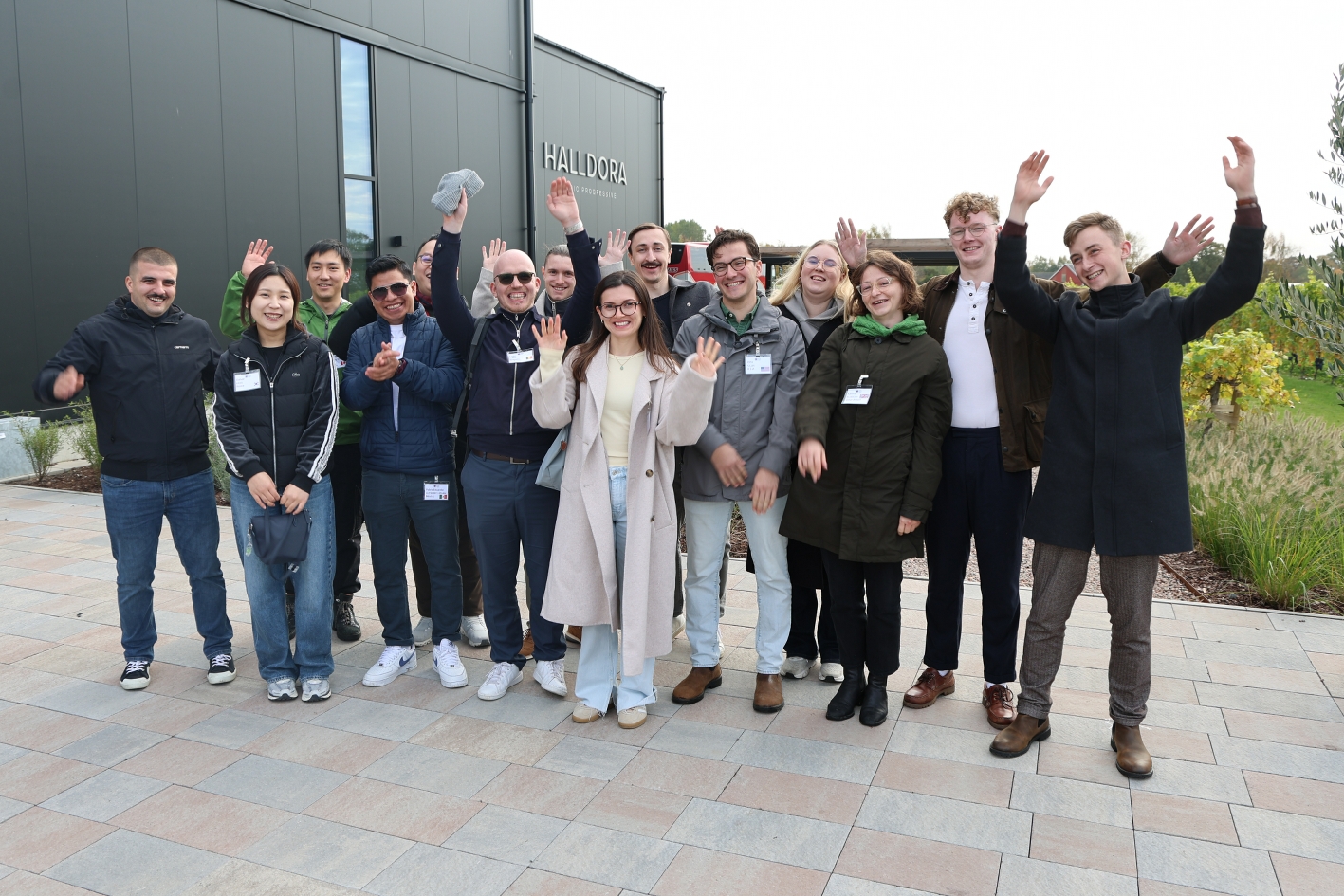
As Halldora, just like Tånga, did not have any wine available for tasting, the experience instead involved sampling the different varieties of grapes grown at the vineyard. A slightly different exercise that added a further dimension to what wine is all about. As a final surprise, we were given a tour of the assembly line for the famous, hand-built cars from Koenigsegg.
Thora Vineyard
After a short and much-needed rest at the hotel, it was time to return to the coach for the day’s final visit: Thora Vineyard on the Bjäre Peninsula. Here, French winemakers work with grape varieties including Solaris, Pinot Noir, Chardonnay, Pinot Meunier, Malbec, Gamay and Chenin Blanc.
Organic and regenerative cultivation methods contribute to wines with purity, character and a clear sense of origin. In the wine cellar, the winemakers work with care, without industrial yeast strains, additives or added sugar, so that each vintage’s natural flavours and aromas can come into their own. Every bottle is produced by hand, based on the belief that a great wine should reflect the place and its unique terroir.
Conclusion
After a day packed with experiences, the day concluded with a fantastic three-course dinner at Thora Vingård. That alone deserves its own article, but I don’t think anyone left there hungry or dissatisfied. We returned to Båstad, where our young sommeliers got some much-needed rest ahead of the upcoming Semi-final on the following day.
Cecilia Vinde Scherdin
Chargée de Presse
Bailliage of Sweden
Photos courtesy of Cecilia Vinde Scherdin and Cecilia Wimmerstedt
Welcoming the world's next generation of sommeliers

Profiles of the award winners

A tribute to our distinguished Panel of Judges